View this post on Instagram
Facelift Before & After
*Each patient is unique, and individual results may vary.
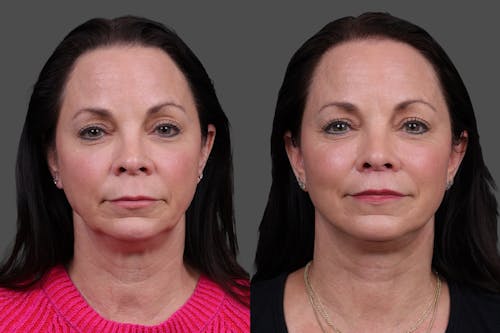

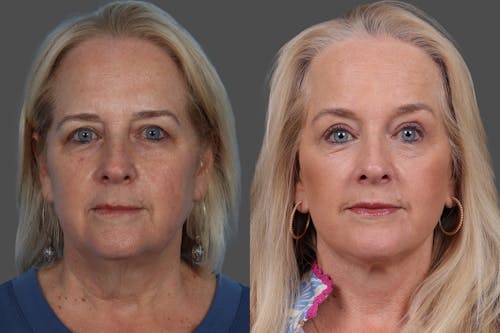
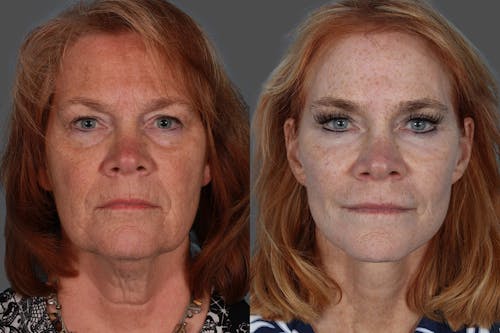
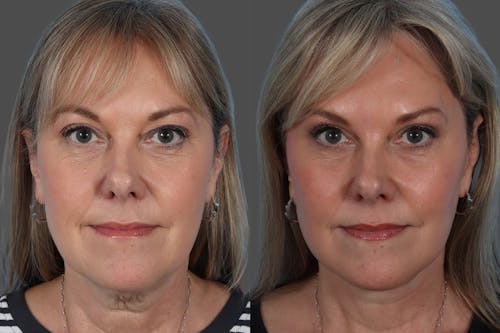
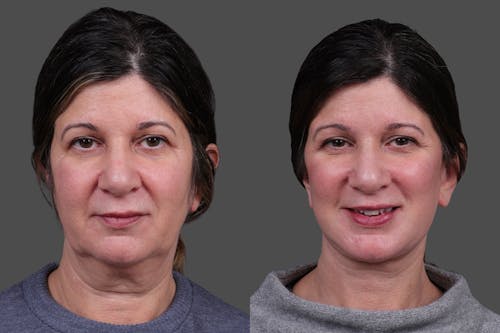
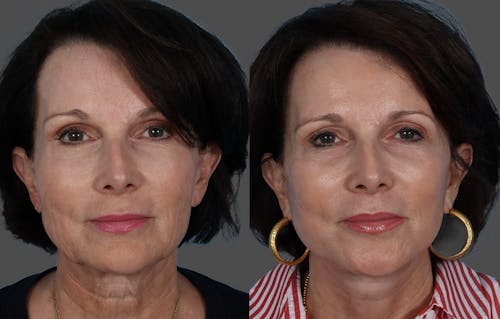
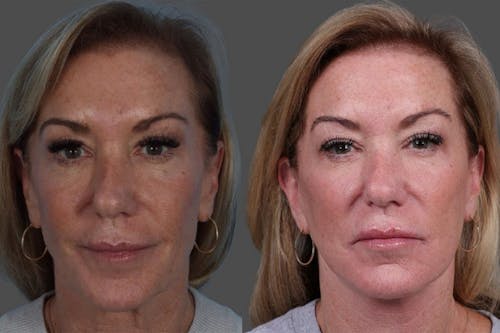
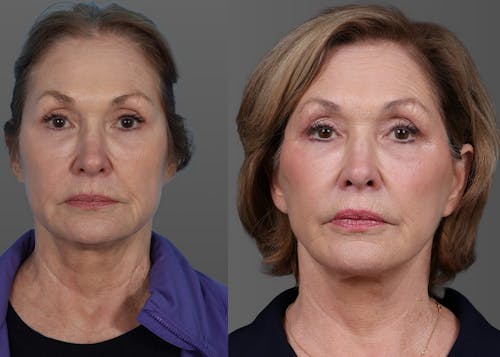
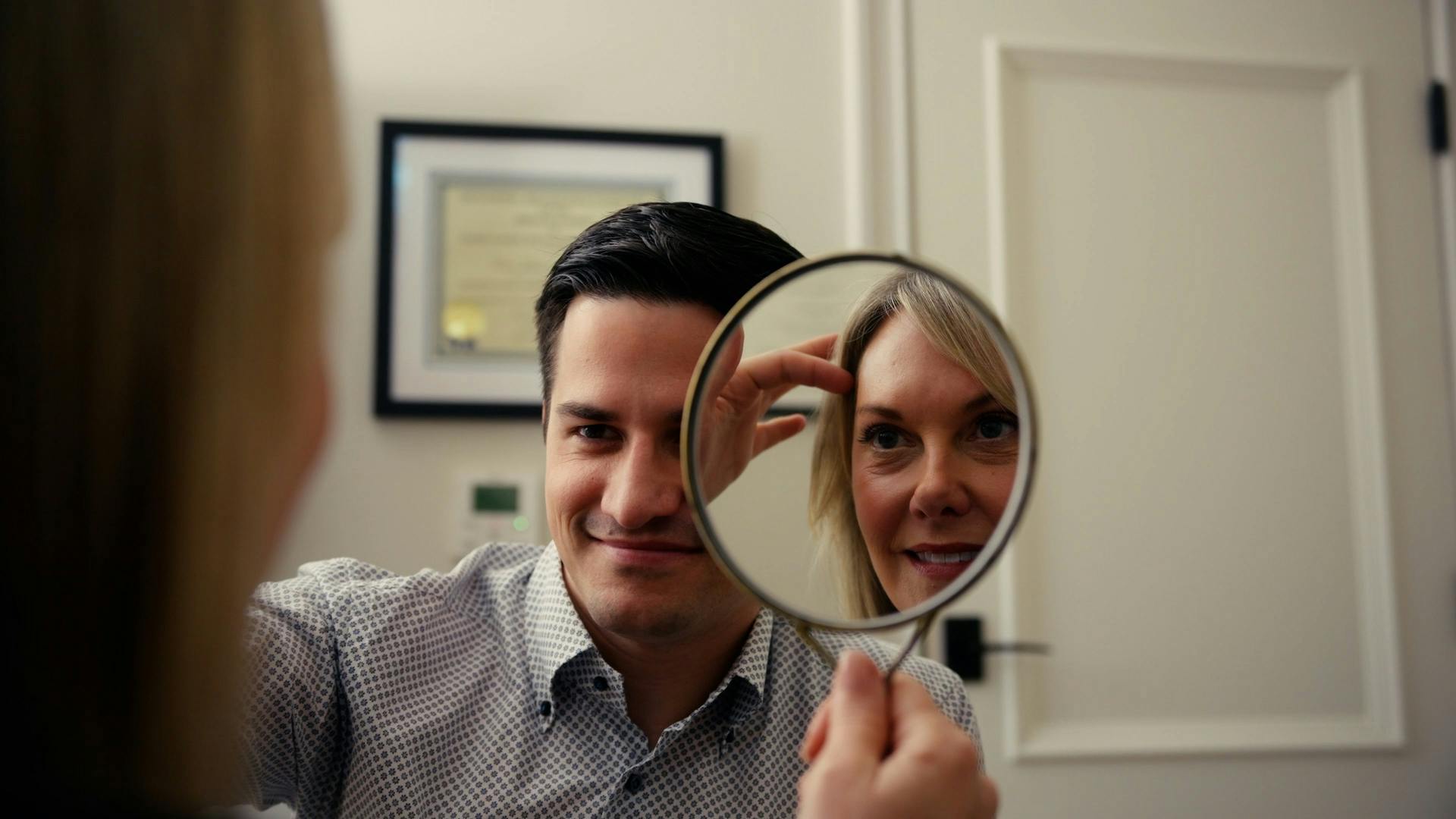
At the Buckingham Center for Facial Plastic Surgery, we believe facial rejuvenation demands an unmatched level of specialization with Deep Plane Facelifts, SMAS Facelifts, and Limited Incision Lower Facelifts/Mini-lifts. Our Austin facelift procedures are delivered by a team of double-board-certified facial plastic surgeons who dedicate their entire practice exclusively to the face. Operating out of our private, state-of-the-art, Quad A-certified surgical center, we pair master-level facial artistry with the highest standards of patient safety and luxury. We provide an unparalleled, private environment designed for optimal safety, comfort, and exquisite, natural-looking results.
*Each patient is unique, and individual results may vary.

Many patients seek a facelift because their outward appearance no longer reflects their internal vibrancy. At the Buckingham Center for Facial Plastic Surgery in Austin, TX, our primary goal is to correct this imbalance, leaving you looking beautifully refreshed, natural, and radiant, with no obvious signs of surgery. Enjoying a youthful appearance is not limited by age when you have a surgeon with expertise, advanced training, and years of experience. True facial elegance isn't about erasing every single wrinkle; it is about restoring the essential structural foundation and rejuvenated definition that naturally soften over time.
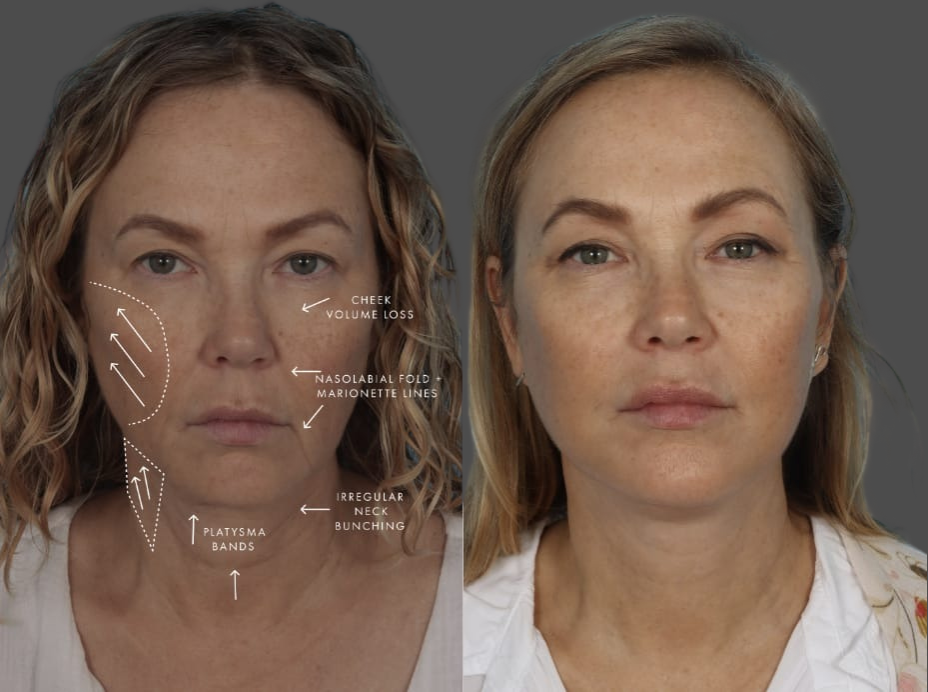
Dr. Erin Smith showcases the transformative procedures performed on this patient, highlighting the artistry behind achieving a natural and balanced facial enhancement. The procedure focused on restoring a youthful appearance in key areas, including the undereye, jowls, and neckline. This patient had a previous surgery, leaving her with several abnormalities and a persistent aged appearance. Dr. Smith specializes in both revision and primary facial rejuvenation, where she can also help correct issues from previous surgeries. The results beautifully address signs of aging, creating a rejuvenated appearance that looks both elegant and natural. The patient is thrilled with the outcome, reflecting the skill and precision Dr. Smith brings to every procedure.
Follow us @BuckinghamCenterFacialPlastics on Instagram
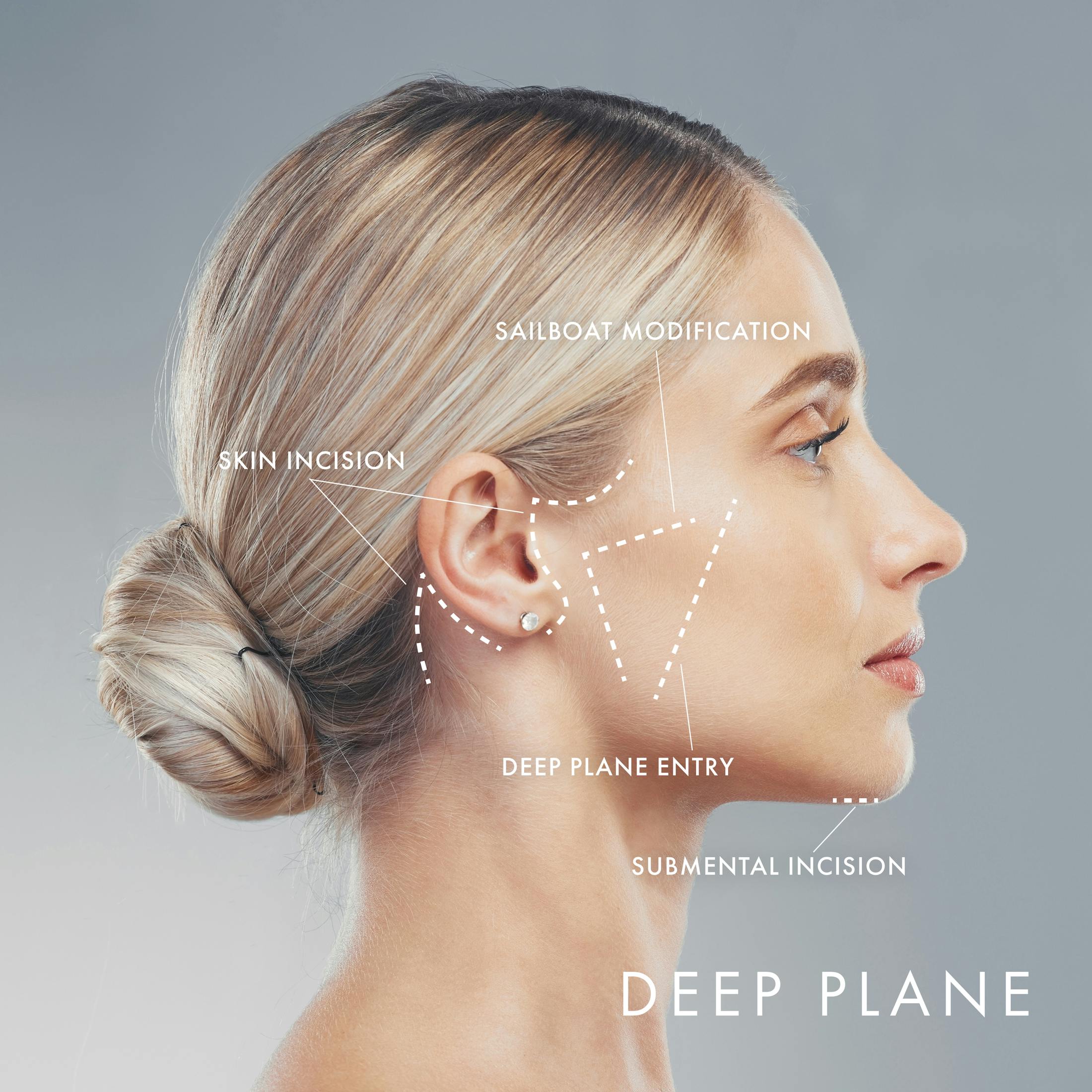
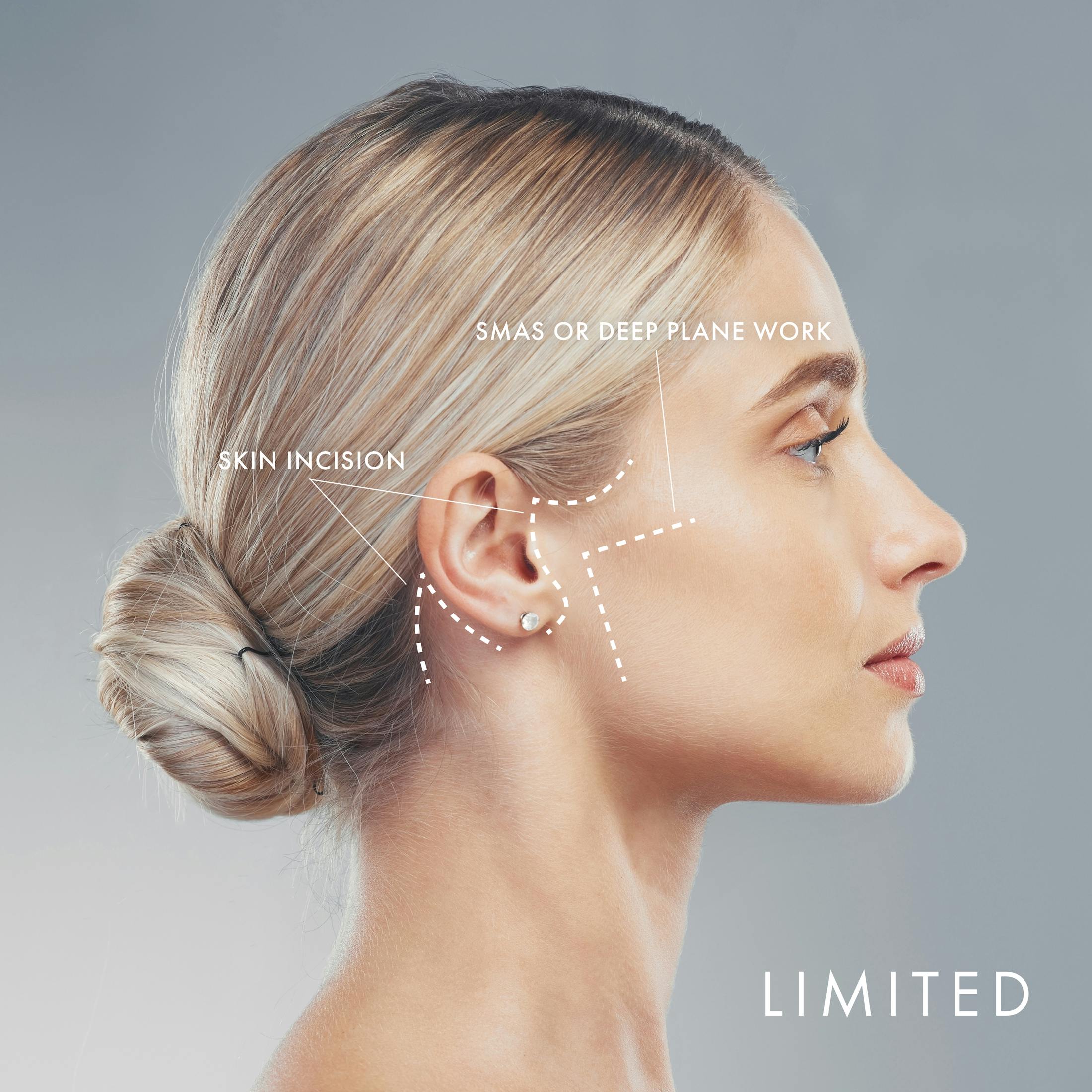
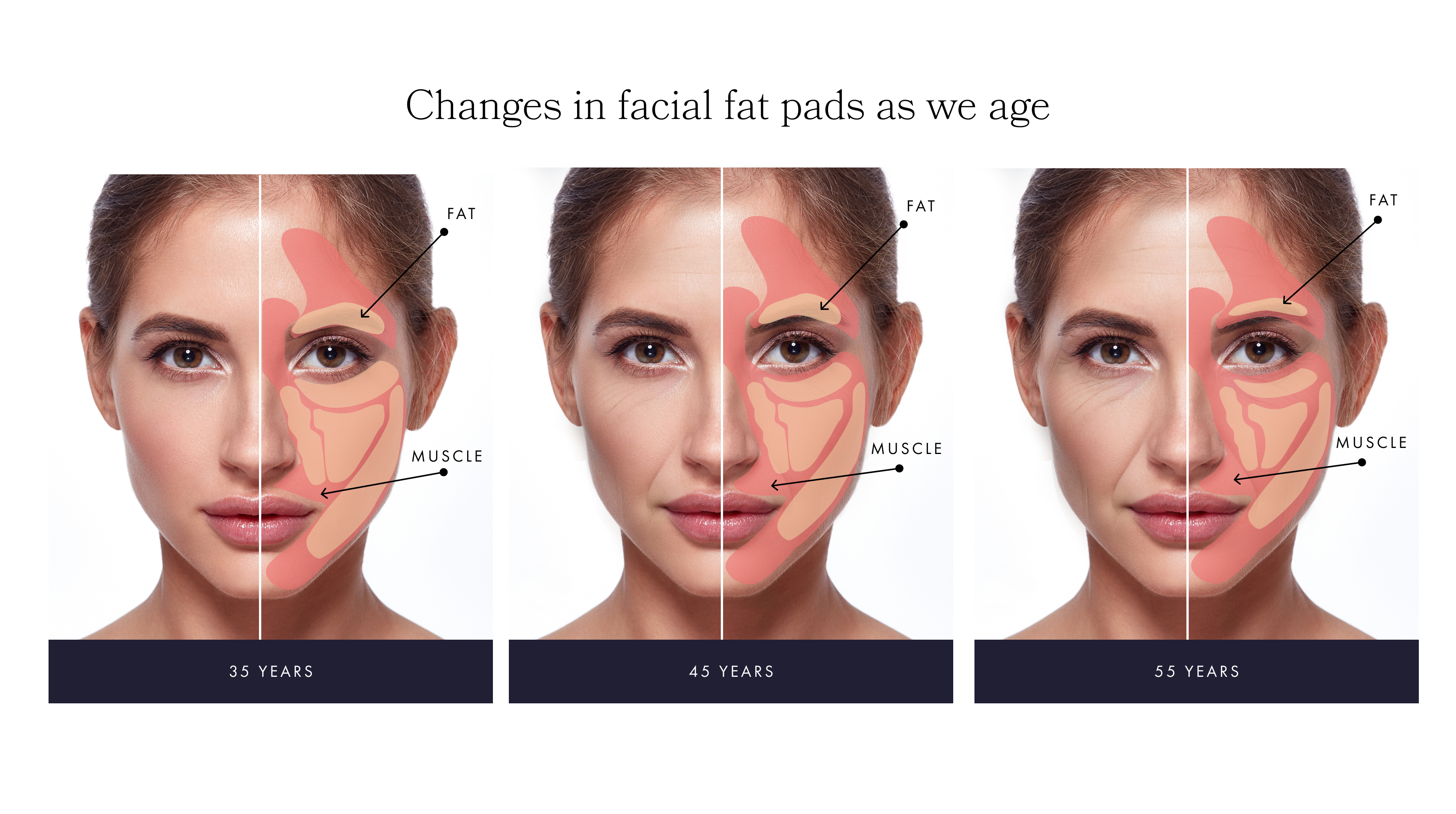
As we age, the natural fat pads in our face undergo significant changes, contributing to a more aged or hollow appearance. In youth, these fat pads are plump and positioned higher in the face, giving the skin a smooth, lifted, and youthful look. Over time, however, the facial fat pads begin to shrink, shift downward, and lose volume due to the effects of gravity, muscle movement, and a decrease in collagen production. Surgical approaches cannot only restore the natural contours of the face but also create a balanced, youthful appearance, allowing patients to feel more refreshed and confident. Each procedure is tailored to the individual, ensuring that results appear natural and harmonious with the patient’s unique features.



Restoring a naturally vibrant, youthful aesthetic requires a master-level understanding of facial anatomy. At our Austin practice, our expertise in facial plastic surgery allows us to precisely target the hallmark signs of facial aging. You may be an ideal candidate for a facelift (rhytidectomy) in Austin if you are looking to correct a lax jawline, deep nasolabial folds, creases, or sagging skin along the chin and neck.
Rather than a specific age, candidacy depends heavily on overall health and tissue elasticity. Our team routinely helps patients from their 40s well into their 80s achieve their aesthetic goals. To ensure an elite standard of safety and exceptional, long-lasting outcomes, candidates must be in good medical health, maintain realistic expectations, and be non-smokers (or willing to pause smoking several weeks before and after surgery).
Before your surgery, prepare a comfortable area for yourself at home. It can be in your bed or on a chair or couch in your living room. Since it is important to keep your head elevated after facial surgery, have plenty of pillows nearby. An adjustable bed or recliner is ideal.
Although you should rest and take it easy after your surgery, you should not be completely immobile. Get up and go for a walk around your home from time to time. When you feel up to it, you might circle the block or walk up and down your driveway. Light movement will help get your blood flowing and speed up healing.
The surgeon is likely to give you directions for cleaning the surgical area in the first few days after your facelift in Austin. You will want to avoid taking a shower right away, as you do not want to get the incision area wet.

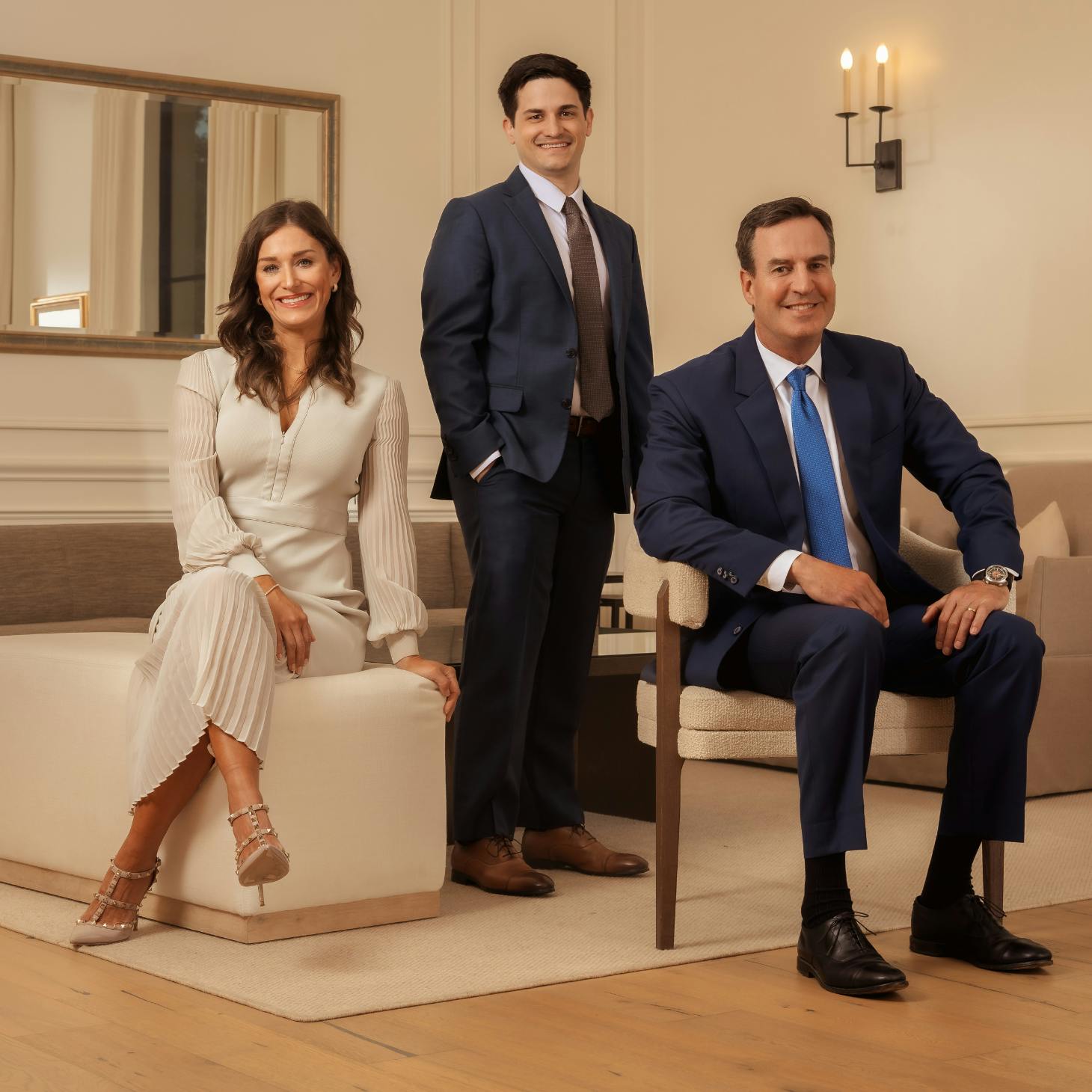
Facelift patients at the Buckingham Center are cared for by three board-certified, fellowship-trained facial plastic surgeons: Dr. Edward Buckingham, Dr. Erin Smith, and Dr. Hudson Frey. With advanced training in deep-plane and high-SMAS techniques, our team specializes in natural, enduring results that reflect facial balance and refinement.
Led by Dr. Buckingham, AAFPRS Fellowship Director, and supported by Dr. Smith’s Beverly Hills-trained artistry and Dr. Frey’s reconstructive expertise, our practice offers unparalleled facial focus in an accredited surgical facility. From consultation to recovery, we deliver safe, personalized care backed by decades of experience.
The type of anesthesia a surgeon uses during a rhytidectomy (facelift) depends on the type of surgery being performed. A mini lift will typically be performed using oral sedation and local anesthesia. A full rhytidectomy will usually require IV sedation. For the most part, general anesthesia is not used during any facial rejuvenation surgery at Buckingham Center.
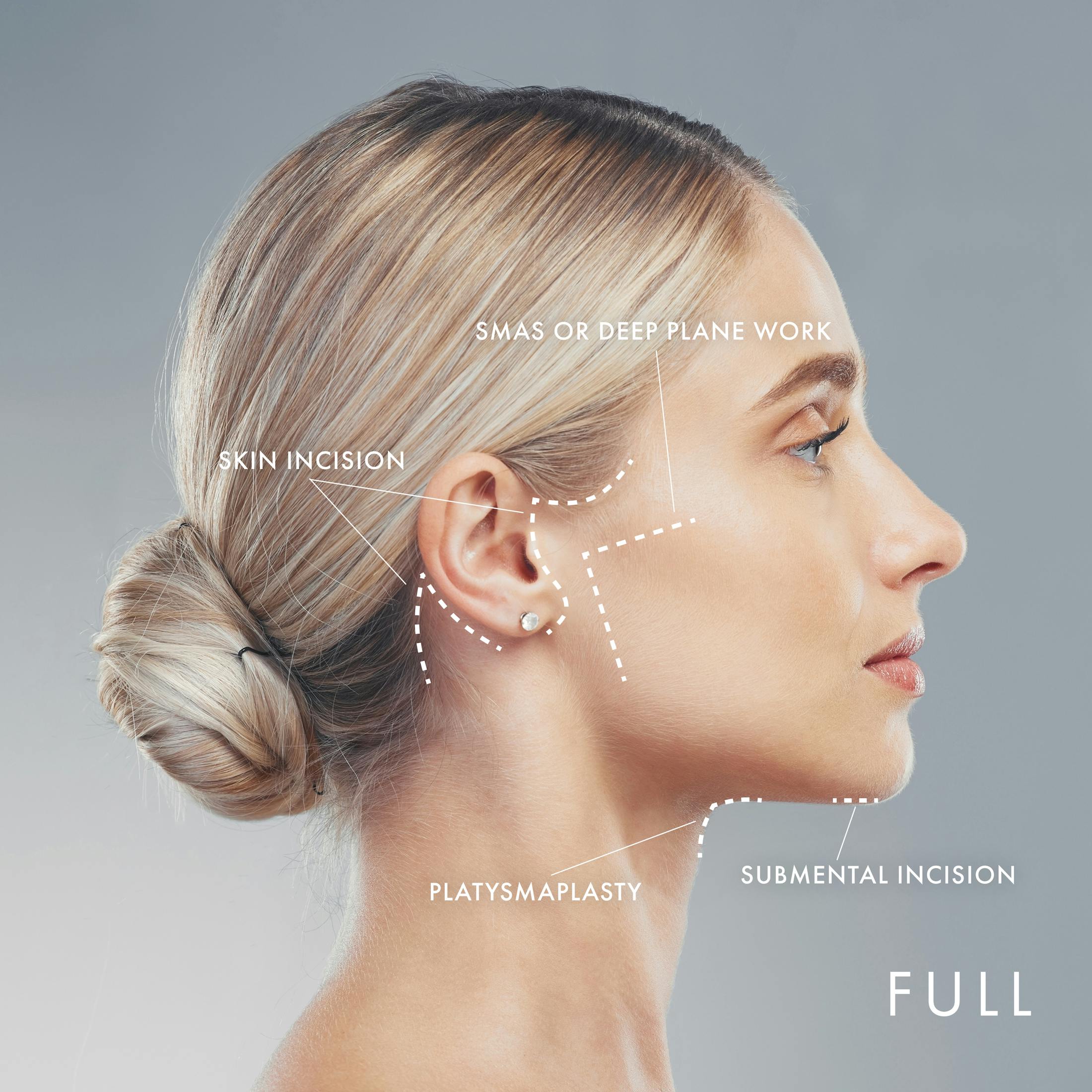
Our surgeons combine different surgical techniques to meet each patient’s plastic surgery expectations. The surgery is an outpatient procedure. During the procedure, the surgeon makes an incision near the hairline and around the ears. Then, the surgeon tightens the deeper layers of the face to minimize facial sagging and remove excess skin to create a smooth, natural-looking result.
Incisions are made around the ears and hairline and are usually completely hidden. Some procedures also require concealed incisions under the chin. The incisions do produce scars, but because of their locations, they are typically barely visible to only close inspection.
During a facelift, you will receive anesthesia and will not feel anything. If oral sedation is chosen with a limited lift, the local anesthesia may burn some, but the procedure itself will be pain free. After the anesthesia wears off, you might notice some mild discomfort in the surgical area. Many patients find that extra-strength Tylenol, taken for a few days after surgery, is enough to manage any discomfort they feel. However, a light narcotic pain medication will also be prescribed to be taken as needed.
The recovery period after surgery varies. For lower facelift surgery, sutures remain in place for seven or eight days. Bruising usually clears up after a week following a limited procedure. Bruising may persist for up to 14 days after a more involved surgery. Many people can go back to their social activities within seven to ten days. How long you need to take off work depends in large part on the type of work you do and how comfortable you are in letting people see you after surgery.
You can start light exercise, such as walking, about a week after your surgery. It is a good idea to wait at least two weeks before resuming moderate exercise. Very strenuous and vigorous workouts should be postponed for three weeks after surgery.
A pixie ear deformity can occur after facial rejuvenation surgery if the surgeon removes too much skin from under the earlobe. The result is an earlobe that is pulled down. This can be avoided by having your facelift performed by a trained facial plastic surgeon, who will take steps to preserve the earlobe attachment and avoid excessive skin removal. If you do have this deformity, it is easy to correct by detaching the earlobe from the facial skin and repositioning it in the correct location. The correction will leave a scar, but the scar will be hidden beneath the earlobe.
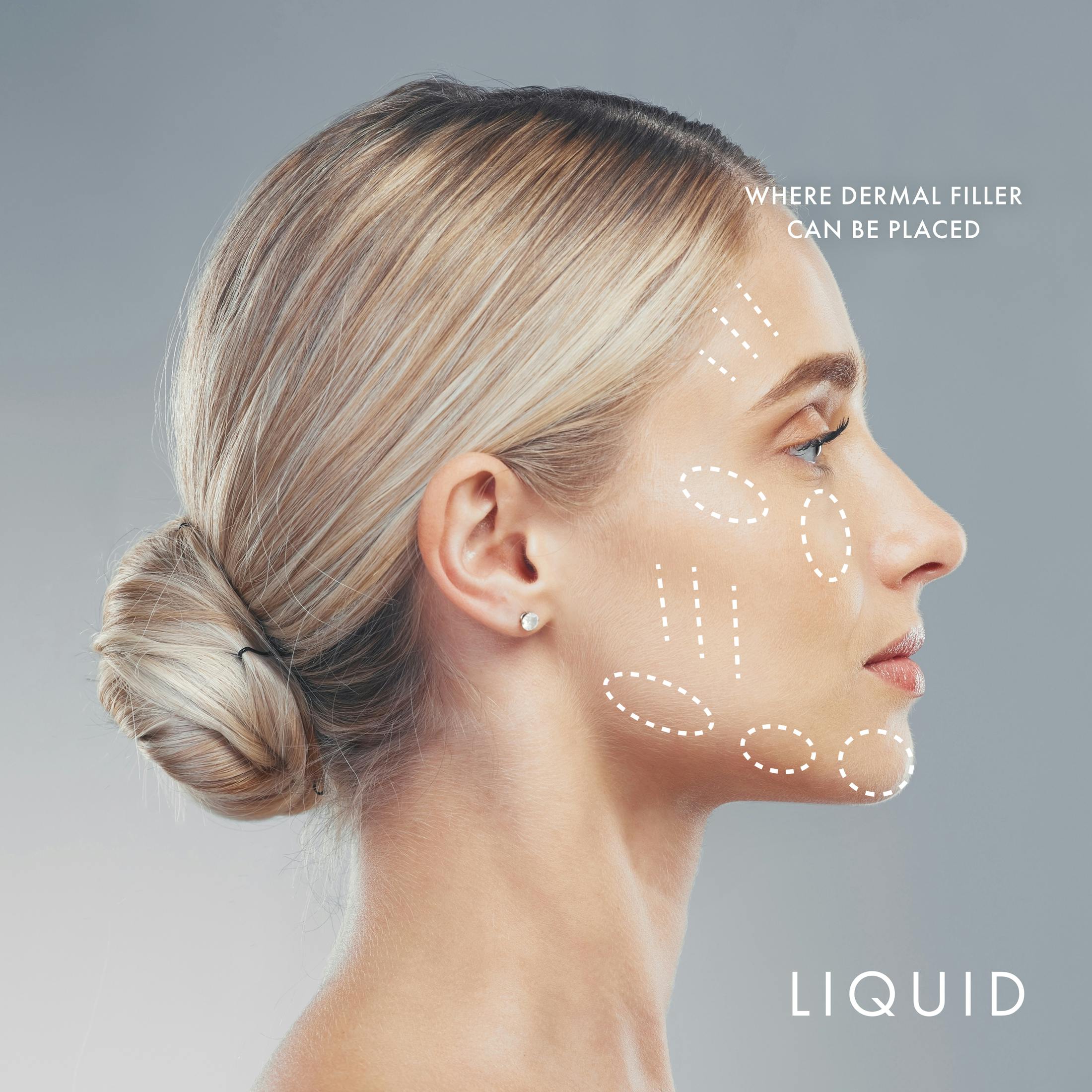
Your facial structure does play a role in your results from facial rejuvenation surgery. Your surgeon can adjust the procedure to give you the best results possible and improve the appearance of your bone structure. The surgeon might also recommend a chin augmentation to improve your jawline or a fat transfer to add more volume.
Many people consider having a limited incision facelift or a full lower facelift in their 40s; however, the best age to have these procedures depends on the patient’s bone structure, facial shape, and weight. The most common age to perform a full facelift is the early 50s to late 60s. Limited incision facelifts are common in the 40s, but may be sufficient even at a much older age and is dependent on the individual patient’s anatomy.
There is no absolute age limit for a facelift. Surgeons at the Buckingham Center have performed limited incision facelifts for patients in their 30s (rarely) and patients in their 80s. Conversely, I have turned patients away who are 50. The real question is: what is the health of the patient? If the patient is healthy, then assuming the person has age-related changes that a facelift can help can provide great benefit. There is not any advantage to doing a facelift earlier or later; you should have one when your face undergoes enough changes that it bothers you enough to have a surgical procedure.
We pride ourselves on the fact that our patients can wear their hair in any style they want to after a facelift. Our post-auricular incision is performed right along the posterior hairline. It is carefully sutured and typically heals without visibility. Incisions can also be made into the hair behind the ear; however, when done in that way, a surgeon has to realign the hairline to prevent a step-off. Usually, the neck does not lift well in that vector.
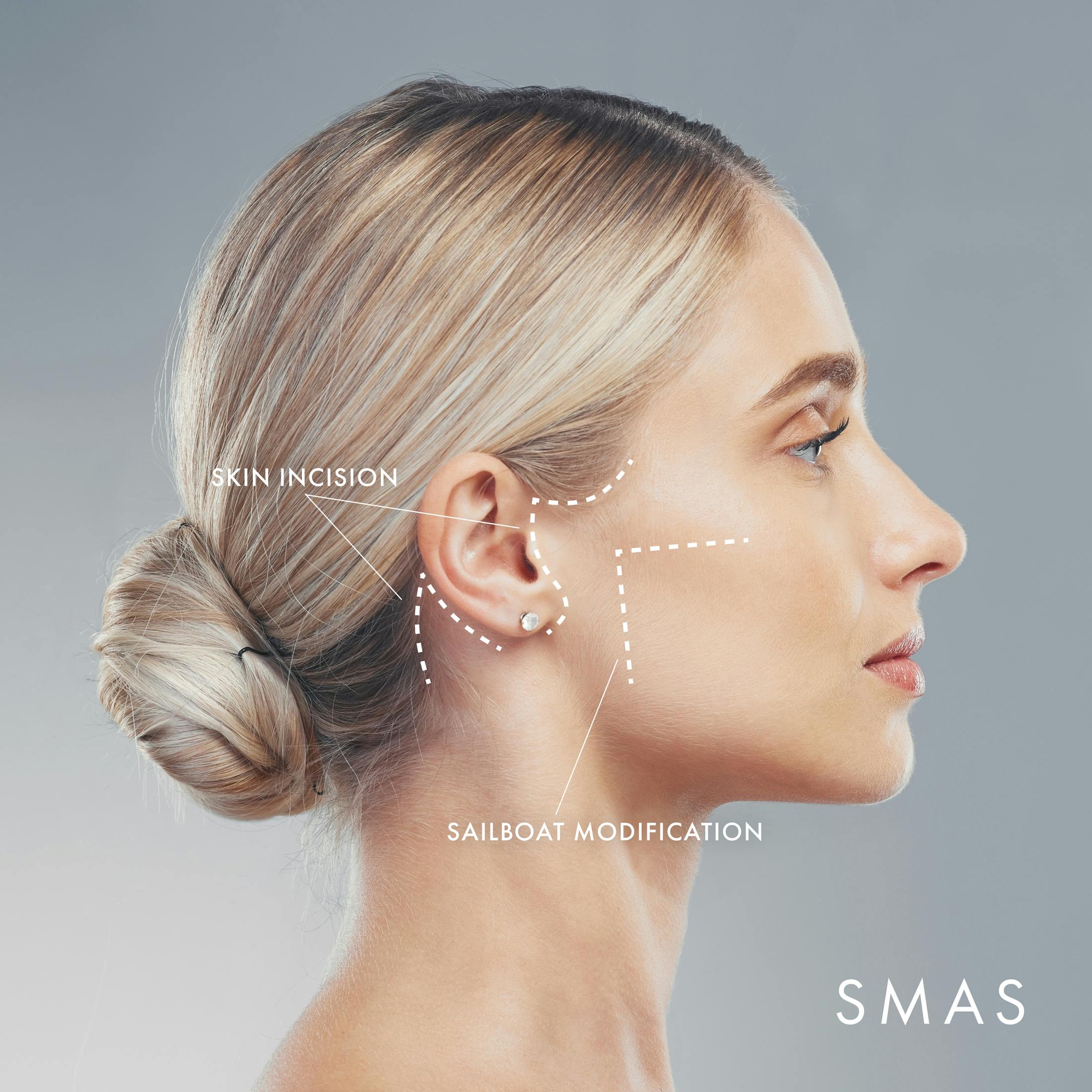
The terms you are referring to are not standardized; however, the question can be answered using traditional thoughts. The face has layers that consist of skin, fat, SMAS, fascia, nerves, muscle, and bone. A SMAS facelift refers to a facelift in which the skin is elevated, and then the SMAS is elevated off the deeper structures and used to suspend the face. Many different degrees of SMAS elevation may be carried out, from just incising the SMAS to elevating it for a great distance.
During an aggressive SMAS lift, the dissection is carried out over the cheek and down one of the facial muscles to attempt to elevate the cheek and smile line. However, studies indicate that the smile line improvements achieved with this procedure are short-lived. A deep plane lift involves separating and lifting various facial ligaments in the midface as well, allowing for a more substantial SMAS repositioning in a tension-free fashion. We perform a wide variety of facelifts that are all SMAS in nature from our limited incision lift and progressing to a deep plane lift.
In patients without a great degree of aging, we might recommend a mini-lift or limited incision facelift with less SMAS work. When a patient has a greater degree of aging, we will perform a more extensive SMAS lift, including the traditional deep plane lift. The results from any of these can be great, and they should be matched to the individual patient. They can each last the same length of time if utilized correctly.
Facelift Video Guide at Buckingham Center for Facial Plastic Surgery

Subscribe to our newsletter for exclusive offers, expert tips, and the latest insights in facial aesthetics. Stay ahead with updates straight from our experts—delivered right to your inbox!