View this post on Instagram
The surgeons at The Buckingham Center for Facial Plastic Surgery offer nose-reshaping solutions (i.e., rhinoplasty procedures) for patients in Austin & the surrounding area.
The surgeons at The Buckingham Center for Facial Plastic Surgery offer nose-reshaping solutions (i.e., rhinoplasty procedures) for patients in Austin & the surrounding area.
*Each patient is unique and individual results may vary
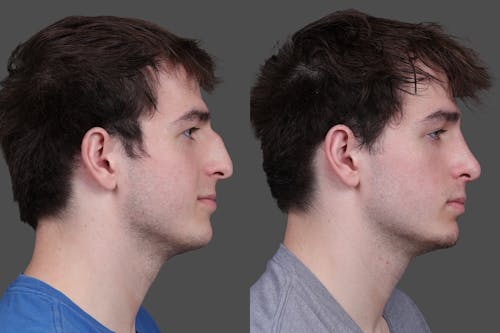
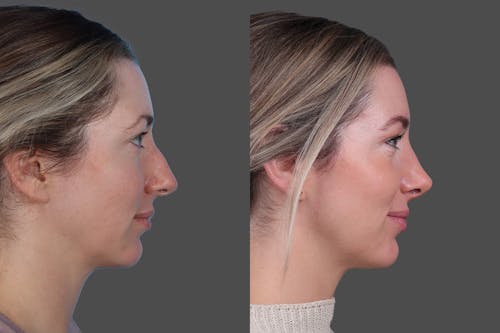
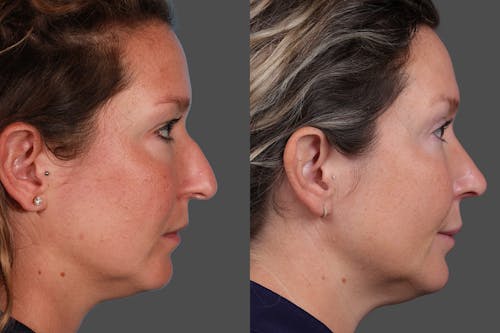

Our surgeons have years of training and experience performing rhinoplasty procedures in Austin, TX. A rhinoplasty is a plastic surgery procedure designed to alter the size and shape of the nose. Rhinoplasty enhances the appearance of the nose and allows it to complement an individual’s other facial features. An overly large, dominant, or deviated/crooked nose can be reduced and straightened to bring more attention to captivating eyes or an attractive smile. Even slight surgical alterations to the structure of the nose can provide dramatic improvements by harmonizing the facial features.
Follow us @BuckinghamCenterFacialPlastics on Instagram
Rhinoplasty Video Guide at Buckingham Center for Facial Plastic Surgery

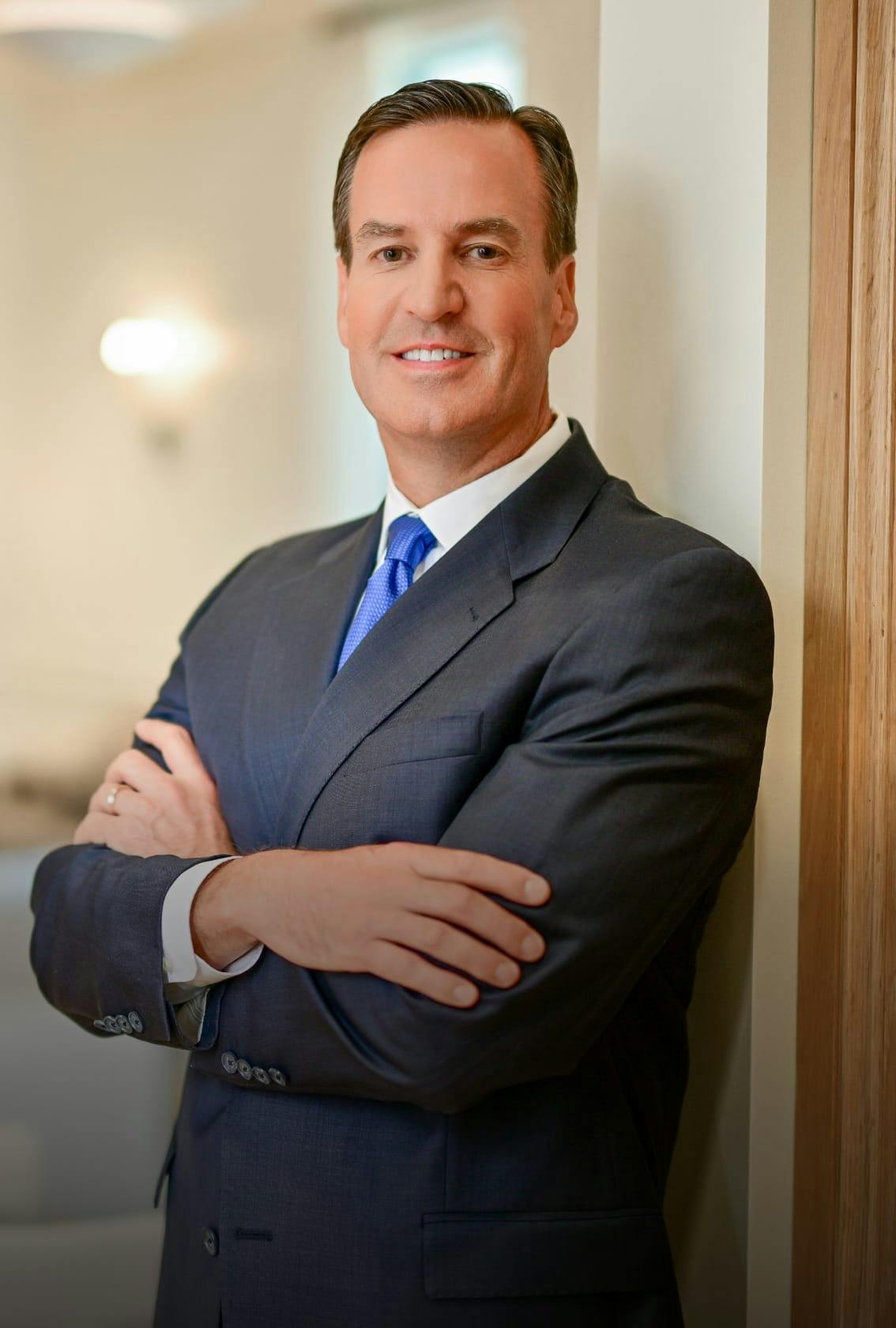
The Buckingham Center for Facial Plastic Surgery offers unbridled excellence in rhinoplasty in Austin, TX. Three facial plastic and reconstructive surgeons, a dedicated medical team in our accredited surgical facility, and our science-based approach ensure proven results tailored to your aesthetic aspirations. Our commitment goes beyond surgery; we strive to build lasting connections. Experience a supportive, friendly environment from your initial consultation to realizing your rhinoplasty goals. Elevate your confidence and appearance with precision, safety, and care.
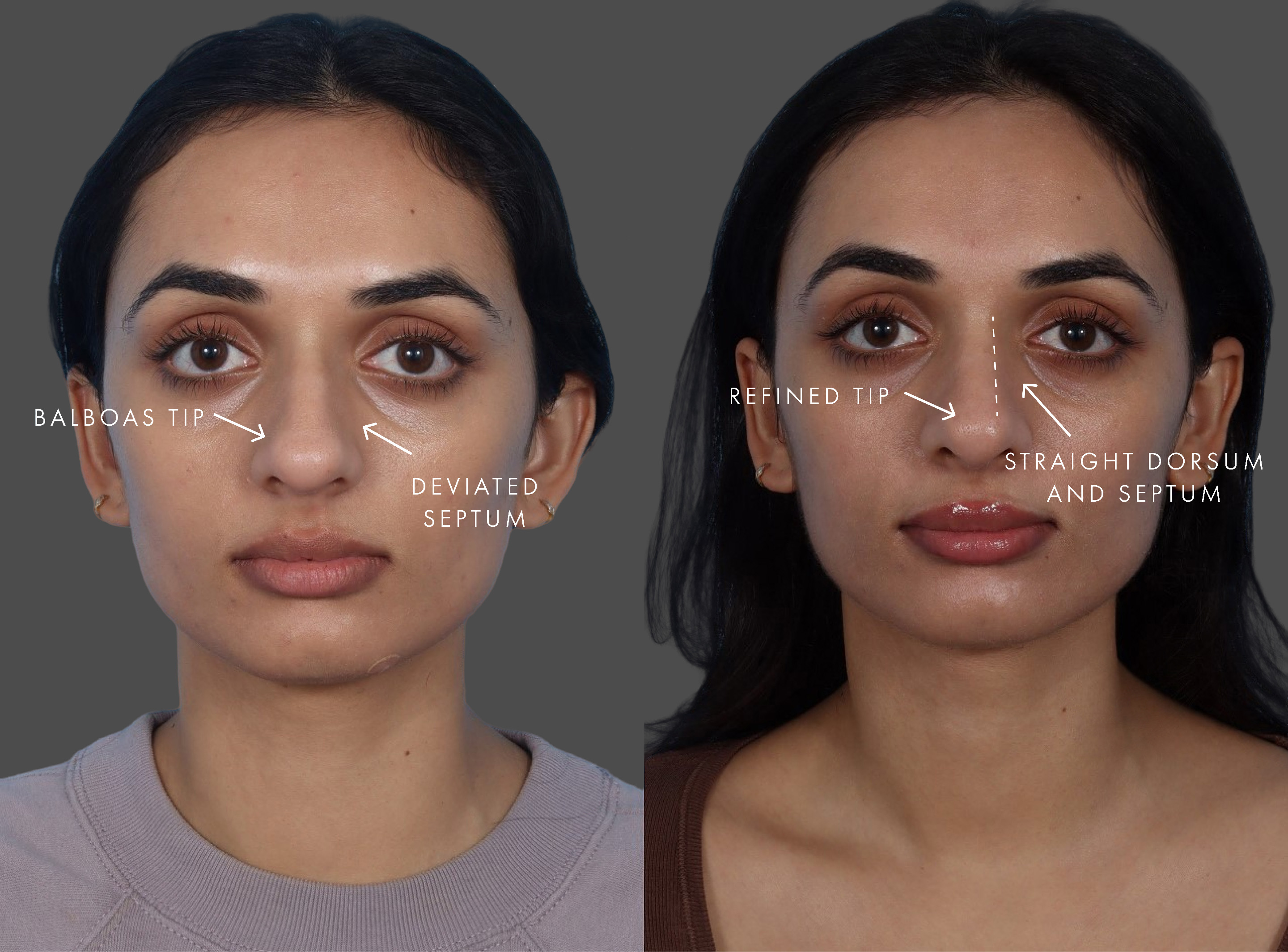
You can expect to achieve natural-looking results that enhance your beauty that compliments your other features rather than distract. At Buckingham Center, our trusted facial plastic surgeons perform a high volume of rhinoplasties in Austin each year, providing them with the specialized expertise and refined skill necessary to be true leaders in the field. Every procedure is custom-designed to ensure a result that fits your unique facial structure, moving far beyond a cookie-cutter approach to deliver a nose that looks and feels entirely natural. A rhinoplasty can be used to alter or improve the following:

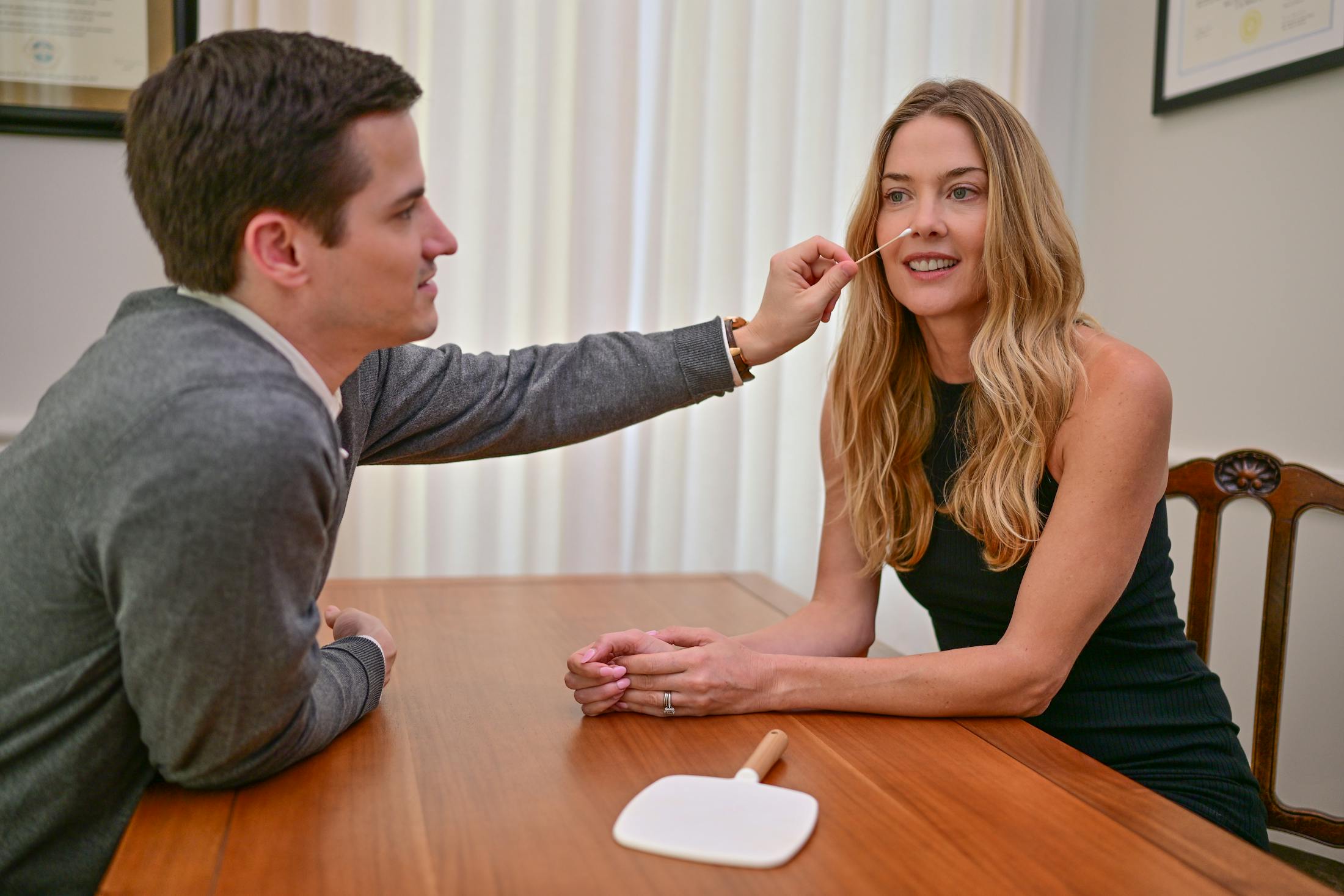
You will meet your surgeon during a private patient-doctor consultation. This is the perfect time to share your goals and expectations with the doctor. The surgeon reviews your health history, examines your nose and facial features, shares before and after photos with you, and provides you with a professional recommendation. The surgeon’s recommendation is custom-designed specifically for you. During the consultation, 3-D Vectra digital imaging software will give you pictures of the expected improvements. A facial analysis will determine which treatment will achieve the most pleasing results, and your surgeon will answer each of your questions as well as personally address any specific concerns that you may have.


Our surgeons perform rhinoplasty procedures at an outpatient surgical center in Austin, Texas.
Rhinoplasty is performed under general anesthesia.
The surgeon begins the rhinoplasty procedure by separating the skin on the nose from the underlying supportive network of cartilage and bone. The cartilage and bone are sculpted to match the patient’s desires, and the skin is then replaced. Stitches are used to close the incisions. The procedure is performed with internal incisions (endonasal) or small external incisions (open approach). Your surgeon will thoroughly discuss these options with you during your consultation.
A rhinoplasty procedure usually requires two to four hours, but this varies slightly depending on each individual case.
Two incision options are available for the rhinoplasty procedure. A closed or endonasal rhinoplasty uses incisions on the interior of the nose only. For an open rhinoplasty, an additional small incision is made on the underside of the nose between the nostrils. Our surgeons are highly skilled and knowledgeable when it comes to performing nose-reshaping procedures. This experience allows them to adapt rhinoplasty techniques to match the needs of the patient, including minimal refinement and more extensive surgical work. Our surgeons also perform revision rhinoplasty.
After the procedure, you may experience some discomfort, particularly in your nose and head. To minimize post-operative pain, our surgeons use the most delicate techniques possible. In addition, pain medication will be prescribed as needed to alleviate discomfort.
The incisions created during a rhinoplasty do cause fine scars to develop. However, these scars are well hidden. During the closed procedure, the incisions are created inside the nose, and any postsurgical scarring is externally invisible. In the open rhinoplasty, a very fine scar may be seen but is well concealed on the underside of the nose. This incision will fade with time and usually requires no concealment.
After your nasal surgery, your nose will be covered with a moldable foam and aluminum splint. A small intranasal non-stick dressing is removed at home on the first postoperative day. The splint and sutures are removed from the nose in about one week. Your face may be slightly puffy, you may have a dull headache, and your nose will feel uncomfortable and achy. Minor bleeding may be experienced, along with swelling and bruising on the nose and under the eyes. These symptoms gradually fade within one week, and your nose should look reasonable in two to three weeks, with continued improvement after that. Small degrees of swelling may be experienced for the first year.
The surgeons at The Buckingham Center typically recommend that patients resume regular activities, including work, after one to two weeks. This depends on the type of labor and activity that is required of you. You must protect your nose for several weeks after the surgery while it heals.
You may resume light activity within the first two weeks after your rhinoplasty surgery. After your stitches are removed, the surgeon will provide you with specific instructions. Strenuous exercise is commonly approved after three weeks. Any activity that could result in trauma to your nose must be strictly avoided for up to six weeks.
A deviated nasal septum means that the central cartilage and bone inside your nose are moved or shifted to one side or the other. This can happen naturally (congenitally) or as a result of trauma. The symptoms of a significantly deviated nasal septum are usually nasal obstruction, irritation, pain, and bleeding. If the septum is severely deviated, then these symptoms can be miserable. If it is minor, then nothing may need to be done. The correction for a deviated nasal septum is called a septoplasty and may be performed as an isolated procedure or, if necessary, with other functional procedures such as turbinate reduction. When a patient desires aesthetic changes to the nose, a septoplasty may be combined with a cosmetic rhinoplasty.
In general, a nasal hump would be treated using a surgical hump reduction during rhinoplasty. In certain individuals, there is a depression above and below the hump that can be filled with Restylane®, which would be considered a nonsurgical rhinoplasty. The advantage of the surgical option is that the results are permanent. The disadvantages are that it is a surgical procedure with the associated risks and recovery. The advantages of filler are that it is relatively easy and has low risk; however, the disadvantages are that it needs to be repeated and only certain cases are eligible.
Augmentation of the nasal dorsum can be performed with either cartilage or alloplastic materials. Our preference is to use the patient’s own cartilage from either the nasal septum, ear, or rib. As an alternative, donor cartilage, which has been irradiated to remove the antigenic cells, may also be used. We prefer cartilage as it is a natural product that has very little to no risk of rejection or infection. On rare occasions, we will utilize alloplastic materials such as Gore-Tex.
Rhinoplasty can be used to fix flared nostrils if they are primarily flared at rest. If an individual’s nostrils only flare while smiling, then surgery is usually not recommended. The procedure is called an alar base reduction, and it involves removing a small piece of the ala through either an internal or an external incision.
Due to the ethnic makeup in Austin, very few doctors are going to have photos of African Americans before and after their ethnic rhinoplasty procedures. However, at The Buckingham Center, our surgeons do have experience performing rhinoplasty procedures to address issues directly related to ethnicity. To see examples of ethnic rhinoplasty procedures we have performed, please view the before and after photos in our gallery.
This is called a septal perforation, and it can be repaired, but the procedure is not usually referred to as a rhinoplasty but rather a septal perforation repair. Depending on the size of the perforation, it may be performed through either an endonasal approach or an open approach that is very similar to an open rhinoplasty.
Crooked noses can be fixed with rhinoplasty. Depending on the specific problem, it can be a very reliable operation with a high success rate, or it can be very complicated and difficult to make straight. Even with the best technique, healing will sometimes affect the outcome, and the nose will remain somewhat deviated. A consultation will provide additional information as to how difficult your particular case may be.
Many teens are so unhappy with their appearance that they decide the only way to feel better about themselves is with plastic surgery, such as rhinoplasty. This can be a distressing revelation as a parent, but it’s important to approach the situation calmly. Rhinoplasty in teenagers is not unusual, but it’s not right for every teenager. If your family is interested in moving forward or simply wants more information from an expert, the first step is to discuss your teen’s case with an ethical and knowledgeable plastic surgeon. A reputable surgeon will be able to advise you and your teen, providing you with the information you need to help you make the right decision for your family. A skilled facial plastic surgeon should be able to assess the overall facial growth and tell you whether more growth and development are expected before the nose reaches full maturity.


Subscribe to our newsletter for exclusive offers, expert tips, and the latest insights in facial aesthetics. Stay ahead with updates straight from our experts—delivered right to your inbox!