


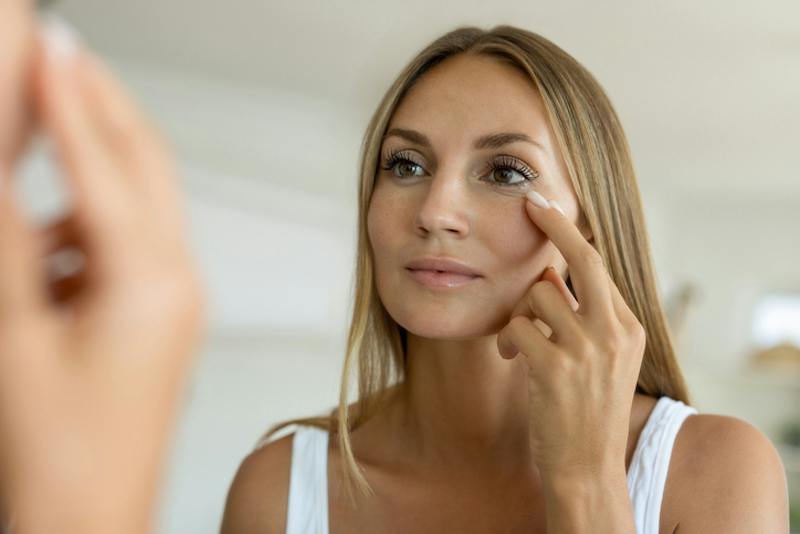
Heavy, tired-looking eyes are rarely about sleep. More often, the cause is excess eyelid skin, fat pads that have shifted with age, or hollowing beneath the eyes that casts a shadow across the face. The Buckingham Center for Facial Plastic Surgery has treated Austin patients for more than 20 years, and Dr. Edward Buckingham, Dr. Erin Smith, and Dr. Hudson Frey use both surgical and non-surgical techniques to correct these changes. Keep reading to see which options can refresh tired eyes without an overdone or hollow result.
What's Really Behind Heavy, Tired Eyes
The skin around the eyes is some of the thinnest on the face, so this area often shows age first. A few changes tend to combine to create that heavy, worn-down look:
- Excess upper eyelid skin that folds over the lash line or brow bone
- Fat pads that bulge forward in the upper or lower lids
- Volume loss beneath the eyes, which creates shadows and a hollow cast
- Repeated muscle movement around the eyes, which produces crow's feet
- A brow that has dropped slightly, adding weight to the upper lid
Eyelid surgery (blepharoplasty) corrects puffiness and drooping skin, but on its own it won't erase wrinkles or eliminate dark circles. A plan that addresses more than one of these causes usually gives a more complete result.
Blepharoplasty: Treating the Structural Causes
Blepharoplasty is the most direct way to address excess skin and fat around the eyes. For the upper lid, the surgeon removes extra skin through an incision hidden in the natural eyelid crease, then trims or repositions the fat that makes the lid look puffy. For the lower lid, an incision placed inside the eyelid, known as a transconjunctival approach, lets the surgeon trim or redistribute fat without disturbing the muscle that holds the lower lid in place.
An overdone or hollow result usually comes from removing too much fat or skin. The surgical team takes a conservative approach to fat removal, and when hollowing is already present, can reposition lower eyelid fat downward or use a patient's own fat to fill in the hollow beneath the eye, known as the tear trough. Either way, the goal is a rested look, not a visibly altered one.
Non-Surgical Options for a Refreshed Look
BOTOX® can relax the muscle that causes crow's feet and soften a heavy brow line without changing the structure of the eyelid itself. It's made from an FDA-approved form of botulinum toxin and typically lasts three to four months.
A hollow look beneath the eyes, which blepharoplasty alone won't fully correct, often improves with dermal filler or a fat transfer into the tear trough. These treatments add volume and smooth the transition between the lower lid and cheek, and are often paired with blepharoplasty for a more complete result.
Why Double Board-Certified Dr. Buckingham Is Austin's Trusted Choice for Tired Eyes
Heavy, tired eyes have clear causes and clear solutions. Blepharoplasty, BOTOX®, and volume restoration each address a different piece of the problem, and the surgical team can combine them to avoid an overdone or hollow result. Dr. Buckingham, a double board-certified facial plastic surgeon who leads the Buckingham Center's team alongside Dr. Smith and Dr. Frey, helps each patient find the right match for their eyes. Call or schedule a consultation to find out what will work best for you.
More Resources
- Looking Tired? Wake Up with Blepharoplasty!
- Look Tired? Upper Blepharoplasty Can Help
- Is Your Face Aging? Here Are Non-Invasive Ways to Fight Back
- Combining Non-Invasive Treatments for Incredible Results
This information is provided for educational purposes only and does not replace a consultation with a board-certified plastic surgeon. Outcomes, risks, and suitability vary from patient to patient.